

SHIPPING’S INDISPENSABLE AND STRATEGIC ROLE
The most Efficient and Cost-effective Transport Mode
Shipping is the most energy-efficient mode of transport:
- It has an impressive record in improving its environmental footprint.
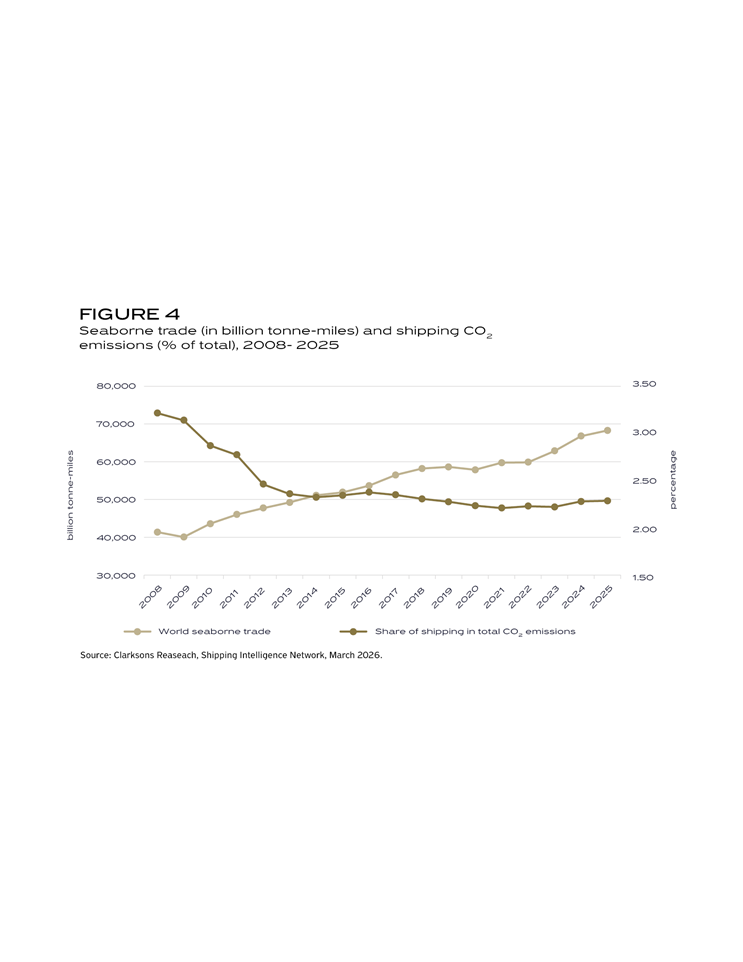
- Despite the steady increase in global seaborne trade, the share of CO2 emissions from shipping has decreased (Figure 4).
- International shipping’s share of global Greenhouse Gas (GHG) emissions has remained the same for 3 consecutive years, at 1.4%[3].
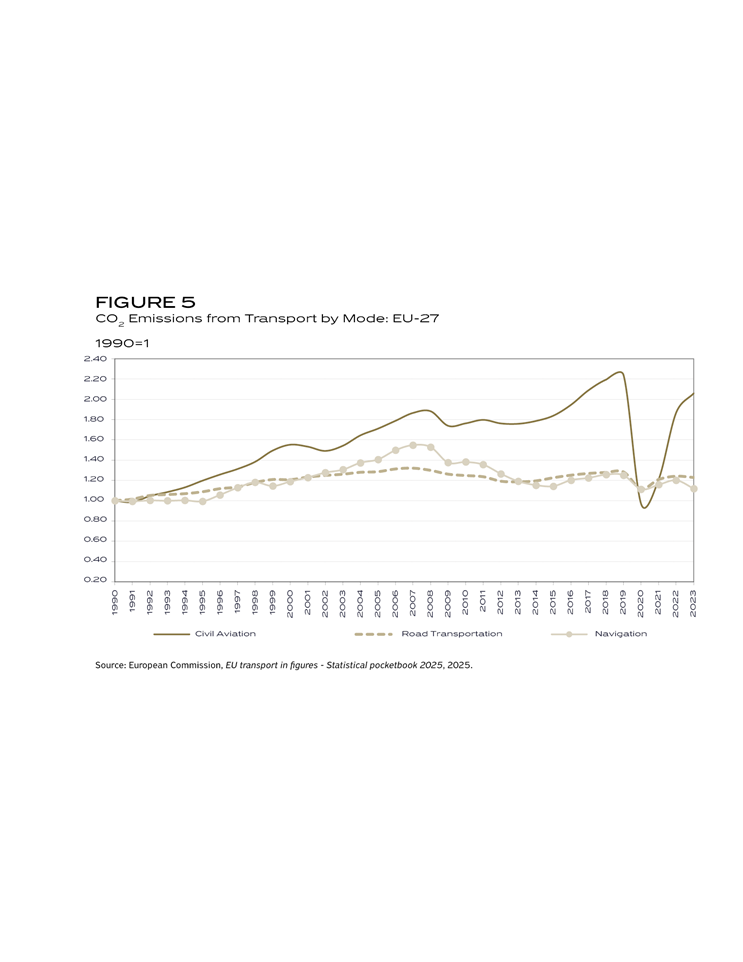
- At the European Union (EU) level, the share of shipping in total transport emissions is currently at an all-time low, as from 15% in 1990, it rose to 16.8% in 2007-2008 and in 2023 it fell to 13.3%[4].
- In the EU, after rail transport where electrification has become the norm in recent years, shipping has shown the best performance regarding CO2 emissions among other transport modes compared to 1990 (Figure 5).
For yet another year, investments by Greek shipowners in newbuildings are increasing
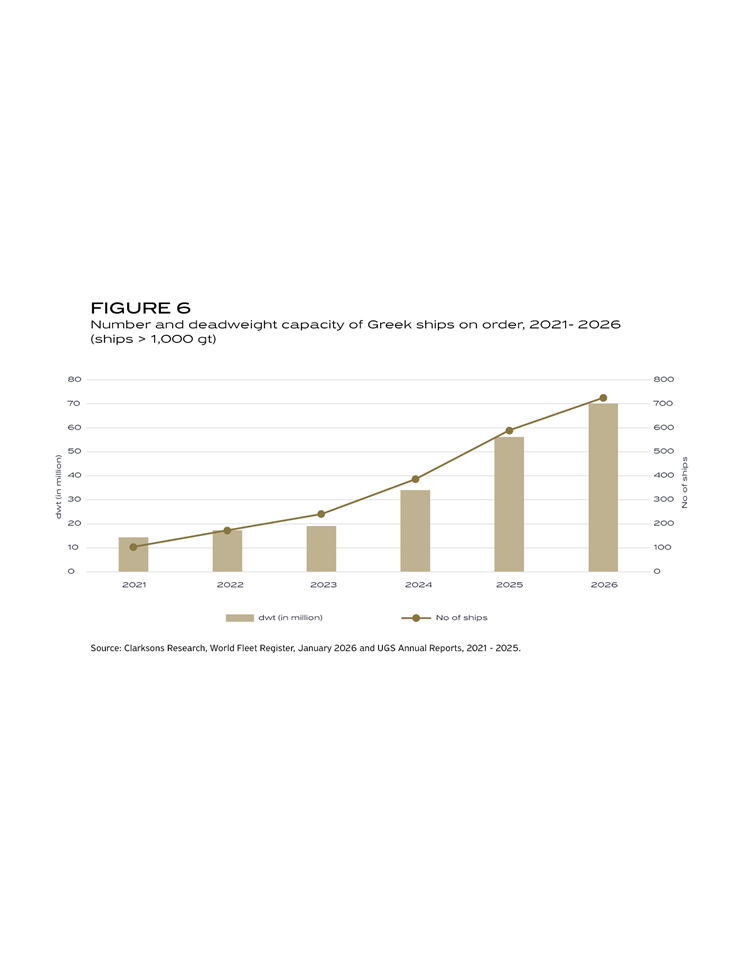
- Currently 725 vessels of Greek interests with a total capacity of 70 million dwt - a figure higher by 13 million compared to one year ago - are being built around the world, with a total value of 60 billion USD.
- Compared to 2021, the Greek orderbook is 7 times higher in number of vessels and 5 times higher in terms of capacity (Figure 6).
Greek shipowners continue to invest in various types of vessels focusing on tankers, bulk carriers and LNG carriers, while containership orders are also on the rise.
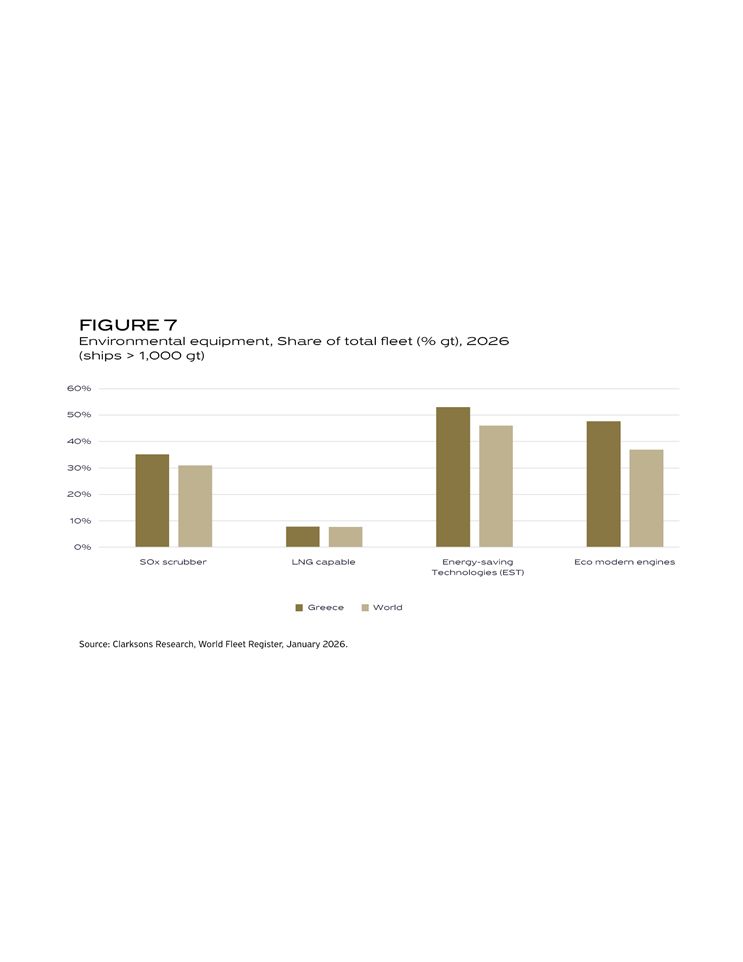
The sustained investments and the constant renewal of the fleet places Greek shipping at the forefront of the sector’s transition to a net-zero future. The Greek-owned fleet ranks above the global average in all categories of environmental equipment (Figure 7) and currently is:
- the largest alternative fuel capable fleet in the world,
- the largest EST-fitted fleet in the world (Energy-saving Technologies[5]),
- the largest SOx-scrubber fitted fleet in the world (in terms of dwt).
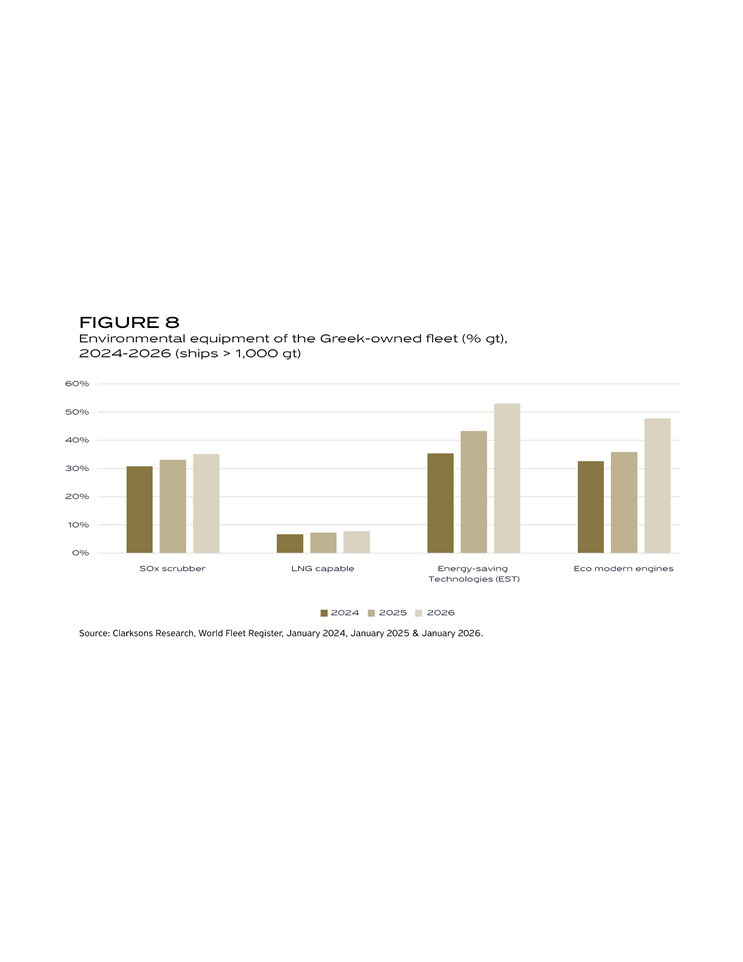
The environmental performance of Greek shipping improves every year (Figure 8), with increasing shares in all equipment categories. For example, while in early 2024, 1 out of 3 Greek-owned vessels was equipped with at least one energy-saving technology, this share now exceeds 50%.
The Greek-owned fleet leads the way to the sector’s decarbonisation.
[3] Crippa, M., et. al., GHG emissions of all world countries, Publications Office of the European Union, Luxembourg, 2023, 2024, 2025
[4] European Commission, EU transport in figures - Statistical pocketbook 2025, 2025
[5] Key examples of Energy Saving Technologies include rudder bulb, stator fin, propeller duct, bow enhancement, hull fin, air-lubrication systems etc.