

SHIPPING’S INDISPENSABLE AND STRATEGIC ROLE
Greek Shipping: The Leading Cross-Trader
Greek shipping continued to grow in 2025 (Table 1):
- It accounts for 19.1% of the global fleet (in deadweight tonnes -dwt).
- The total number of vessels currently reaches 5,800.
- The capacity of the Greek-owned merchant fleet exceeds 458 million dwt.
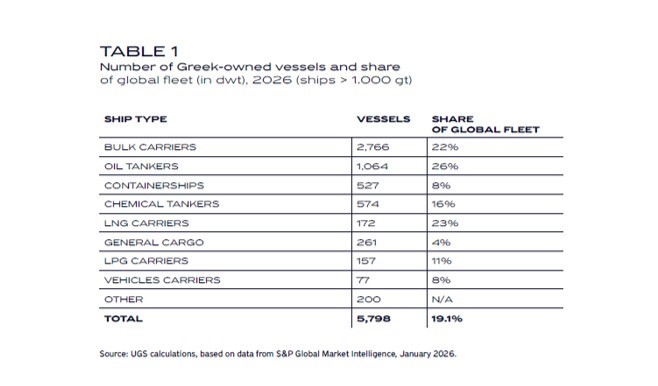
Greece has constituted the top maritime nation for many decades consecutively. It remains the leading force in strategic ship types worldwide by a large margin, such as in oil tankers and LNG carriers, and ranks second in bulk carriers.
Greek shipping is the largest cross-trader in the world:
- Contrary to its main peers, Greek shipping primarily serves the external trade of other nations.
- More than 98% of its capacity transports goods from and to third countries.
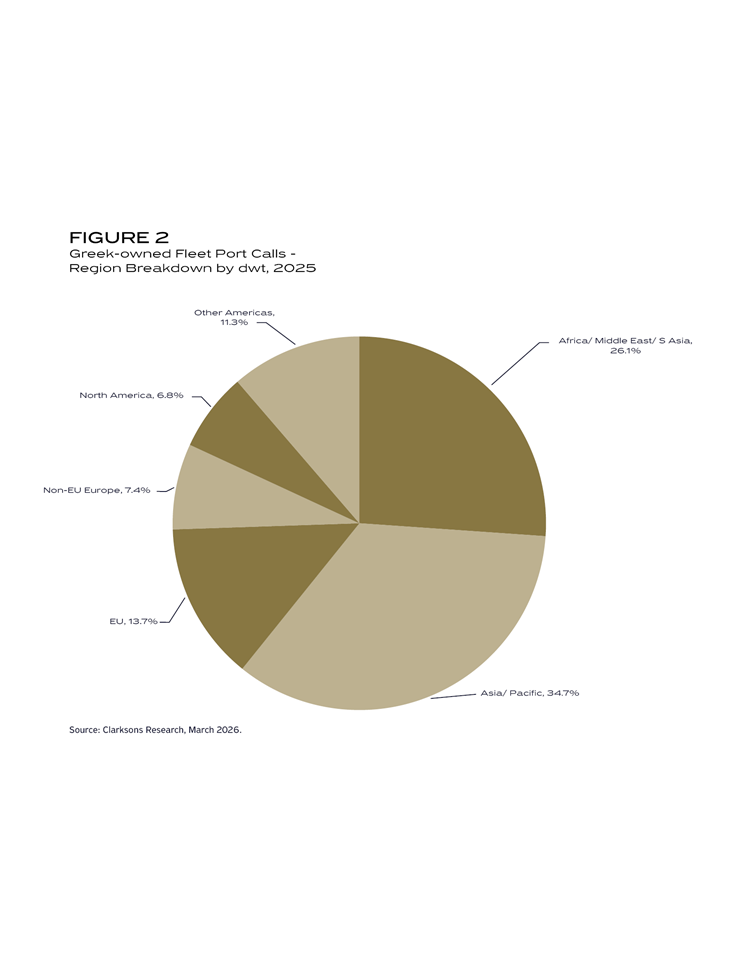
- In 2025, Greek-owned vessels made more than 175,000 port calls[2] in 171 countries around the world (Figure 2).
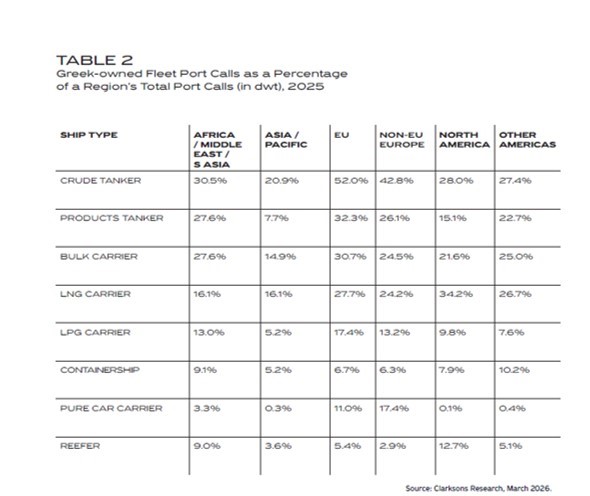
The strategic importance of the Greek-owned fleet for almost all economies of the world is also be reflected in its share of total port calls per region (Table 2).
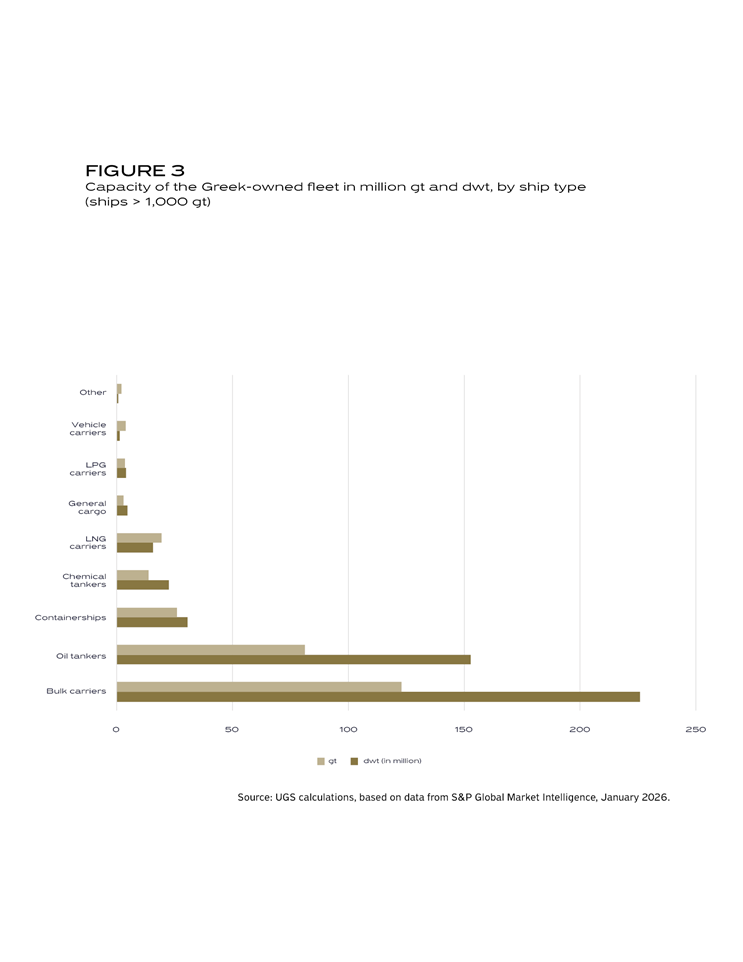
Greek shipping is predominantly engaged in the bulk/tramp sector, but it has presence in all major ship types (Figure 3).
The bulk/tramp shipping sector:
- transports staples such as grain, agricultural products, oil and gas, iron ore, chemical products, coal, fertilizers, and forest products,
- constitutes a perfectly competitive market, with thousands of Small and Medium-Sized Enterprises (SMEs),
- is itinerant in nature.
These features also reflect the flexibility and responsiveness of Greek shipping over many decades.
Greek shipping: a global and universally trusted powerhouse.
[2] Excluding passenger, cruise and service vessels port calls.